

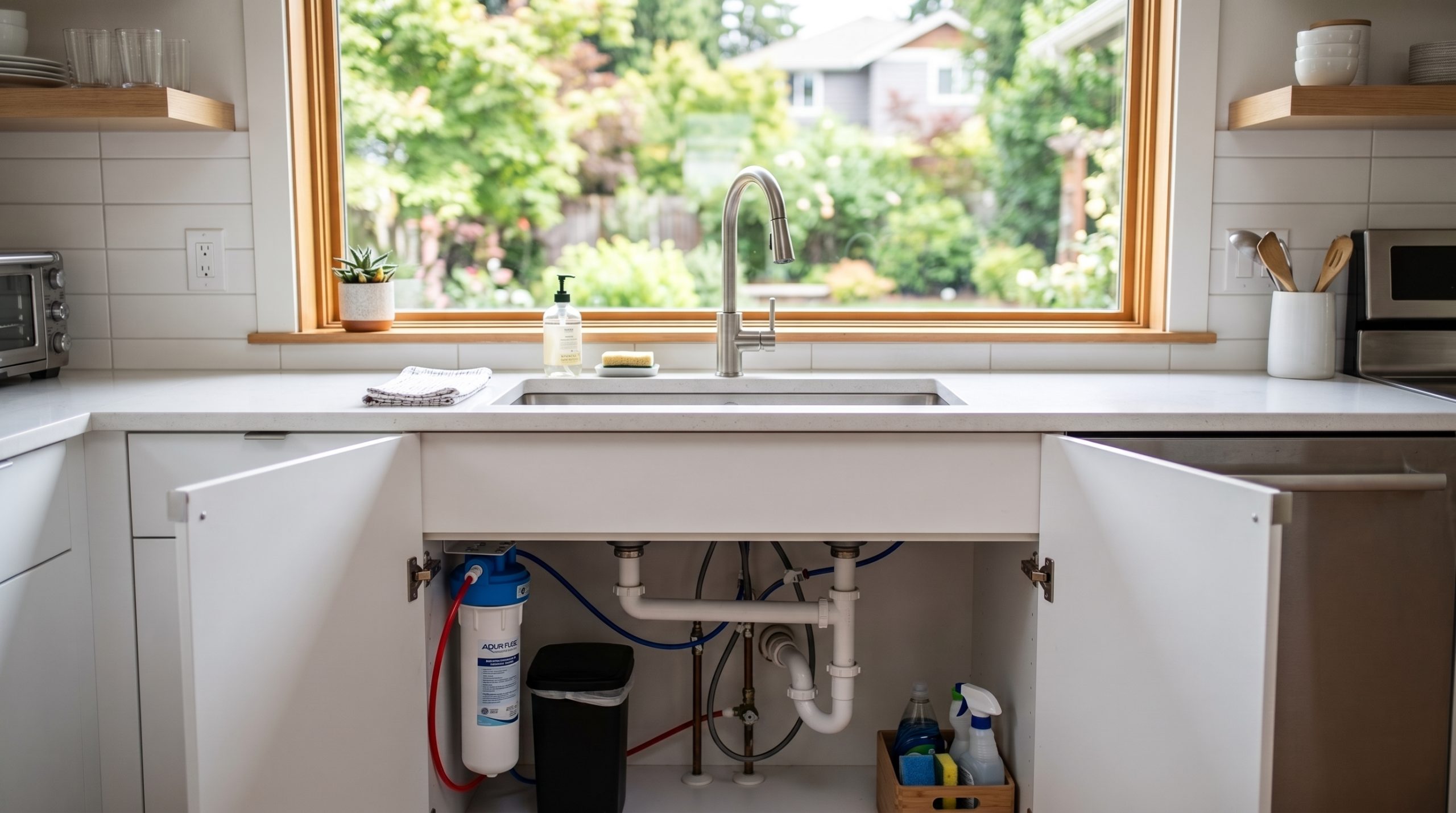
If you’ve filled a kettle with South Shore tap water lately, you may have detected a slight chlorine smell, a slightly off taste, or mineral spots left behind on your dishes. Across Nova Scotia, water quality varies widely from one community to the next — some households draw from municipal systems treated with chlorine or chloramine, while others rely on private wells that can carry naturally occurring iron, manganese, or hard water minerals. For a growing number of homeowners, the solution isn’t bottled water from the store. It’s a filtration system installed quietly under the kitchen sink.
The Trouble With Bottled Water and Pitcher Filters
For years, the go-to fixes for questionable tap water were bottled water or a pitcher filter kept in the fridge. Both come with trade-offs that are becoming harder to ignore.
Bottled water generates a steady stream of single-use plastic, much of which ends up in landfills or, worse, in waterways — a particular concern in a coastal province where marine health is part of daily life. Pitcher filters cut down on that waste somewhat. Still, they treat only a small volume at a time, require frequent cartridge changes, and typically filter only drinking water—leaving cooking water, pasta water, and water used to rinse produce untreated.
What Makes Under-Sink Systems Different
Under-sink water filters take a different approach. Instead of sitting on a countertop or living in the fridge, the filtration unit is installed directly beneath the sink. It connects to the cold water line, delivering filtered water straight from the faucet. That means every glass of water, every pot for boiling vegetables, and every cup of coffee comes from the same filtered source — not just the water you remember to pour into a pitcher.
From an environmental standpoint, the case is fairly straightforward:
- Less plastic waste. A single filtration system replaces months or years of bottled water purchases.
- Fewer replacement parts. Many under-sink systems use durable stainless steel housings instead of plastic ones, meaning less plastic enters the waste stream over the life of the product.
- Lower transportation footprint. Bottled water has to be manufactured, packaged, and trucked to stores. A home filtration system does the work locally, using the water already piped into the house.
- No harmful antibacterial additives. Some water filter brands use nano-silver particles for their antibacterial properties. Still, research shows these particles can wash into freshwater systems and disrupt the microorganisms wastewater treatment depends on—a real concern for a province surrounded by sensitive coastal ecosystems.
An Example Worth Looking At
One system that illustrates this move toward more durable, whole-kitchen filtration is the AquaReveal under-sink system, made by Canada-based Aquarenaissance. Rather than the flimsy plastic housings found in many budget filters, it uses stainless steel chambers designed to be opened, serviced, and reassembled rather than thrown out when a component wears down. It’s built around a two-stage filtration process — a fine carbon block stage for sediment, chlorine, and microplastics, paired with a second cartridge engineered to target chloramine, heavy metals, and other contaminants that basic carbon filters often miss.
Installation is designed for the housing common across the South Shore, including older homes and rental properties: it connects to the existing faucet line with a braided hose, requires no drilling or permanent modification, and the housing sits at the back of the cabinet or mounts to the wall.
A Practical Step Toward Environmentally Friendlier Living
For Nova Scotians looking to cut down on plastic waste without sacrificing water quality, under-sink filtration offers a middle ground between convenience and environmental accountability. It’s a change that happens quietly under the sink, but its impact — fewer bottles bought, fewer cartridges tossed, cleaner water for the whole kitchen — adds up over time.